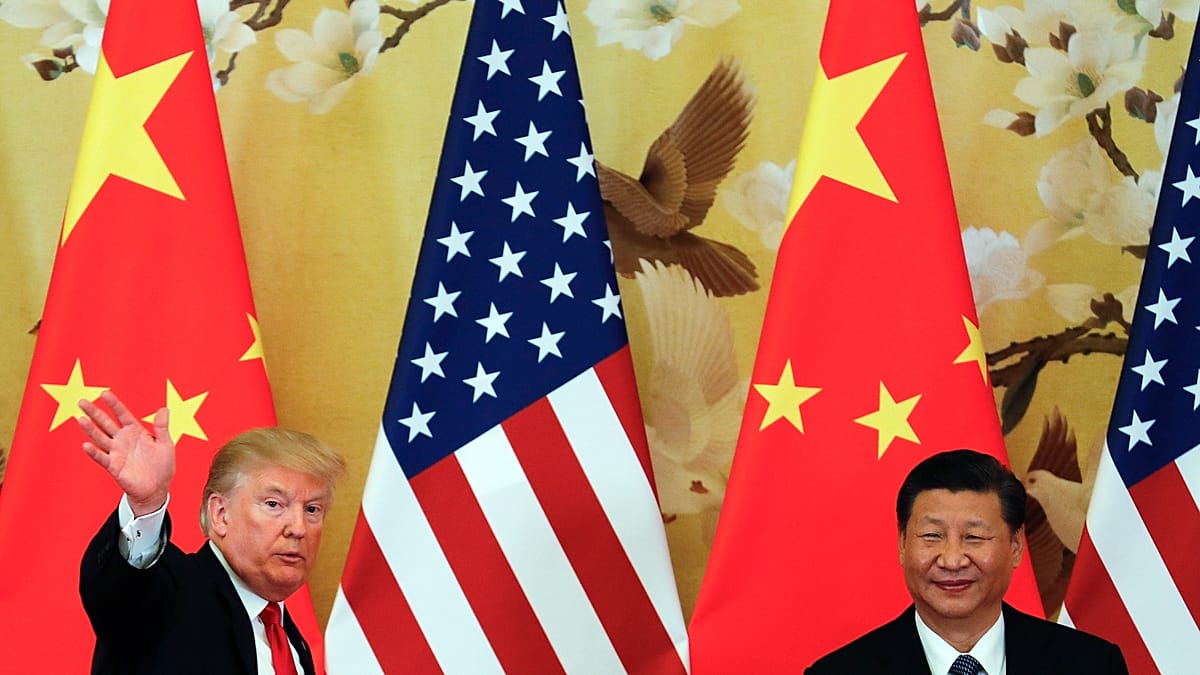
Join a professional US stock community offering free daily updates, expert analysis, and strategic insights for confident investing. Our platform provides curated stock picks, technical analysis, earnings forecasts, and risk management tools to help you navigate market volatility. Whether you are a beginner or experienced trader, we deliver the resources you need for consistent portfolio growth. Join our community today and start making smarter investment decisions with expert guidance at every step. US President Donald Trump’s visit to Beijing this week highlights the intensifying economic competition between the world’s two largest economies. The trip comes as both nations vie for leadership in technology, trade, and global influence, with markets closely watching for potential policy shifts.
Live News
- The visit marks one of the highest-level engagements between the two economies in recent years, highlighting the centrality of economic diplomacy amid ongoing tensions.
- Key discussion points are likely to include trade imbalances, technology transfer rules, and the competitive landscape for emerging industries such as electric vehicles, 5G networks, and clean energy.
- Both nations continue to vie for leadership in global economic institutions and standard-setting bodies, a dynamic that influences investment flows and regulatory frameworks worldwide.
- The rivalry has accelerated efforts by companies in both countries to diversify supply chains and reduce dependency on each other’s markets, a trend with potential implications for manufacturing and logistics sectors.
- Financial markets are monitoring the visit for any announcements that might alter the tariff landscape or affect bilateral trade volumes, though concrete outcomes remain uncertain at this stage.
Trump in Beijing: US-China Economic Rivalry Intensifies Amid Trade and Tech TensionsWhile data access has improved, interpretation remains crucial. Traders may observe similar metrics but draw different conclusions depending on their strategy, risk tolerance, and market experience. Developing analytical skills is as important as having access to data.Real-time data analysis is indispensable in today’s fast-moving markets. Access to live updates on stock indices, futures, and commodity prices enables precise timing for entries and exits. Coupling this with predictive modeling ensures that investment decisions are both responsive and strategically grounded.Trump in Beijing: US-China Economic Rivalry Intensifies Amid Trade and Tech TensionsMarket participants often combine qualitative and quantitative inputs. This hybrid approach enhances decision confidence.
Key Highlights
US President Donald Trump’s current visit to China underscores the deepening rivalry between the United States and the People’s Republic of China, two economic superpowers whose competition now extends well beyond trade balances. The visit, taking place this week in Beijing, arrives at a time when bilateral relations are increasingly defined by a contest for technological supremacy, supply chain dominance, and global economic sway.
The meeting between Trump and Chinese leaders is expected to address a range of topics, including tariffs, intellectual property protections, and the future of advanced industries such as semiconductors and artificial intelligence. Both nations have invested heavily in these sectors, and their competing visions for global standards and market access are shaping the broader economic landscape.
Observers note that the rivalry has evolved from a focus on traditional trade deficits to a more complex struggle over innovation and strategic influence. The US has implemented export controls and investment restrictions targeting Chinese technology firms, while China has accelerated efforts to achieve self-reliance in key technologies through state-backed initiatives.
The visit also takes place against a backdrop of shifting alliances, with both countries seeking to expand their economic partnerships in regions such as Southeast Asia, Europe, and Africa. The outcome of this week’s talks could signal the direction of future economic policies and may affect global supply chains, currency markets, and trade flows.
Trump in Beijing: US-China Economic Rivalry Intensifies Amid Trade and Tech TensionsInvestors often balance quantitative and qualitative inputs to form a complete view. While numbers reveal measurable trends, understanding the narrative behind the market helps anticipate behavior driven by sentiment or expectations.Access to real-time data enables quicker decision-making. Traders can adapt strategies dynamically as market conditions evolve.Trump in Beijing: US-China Economic Rivalry Intensifies Amid Trade and Tech TensionsSome traders combine trend-following strategies with real-time alerts. This hybrid approach allows them to respond quickly while maintaining a disciplined strategy.
Expert Insights
The economic comparison between the US and China reflects fundamental differences in their growth models, governance structures, and strategic priorities. Analysts suggest that while the US maintains advantages in financial depth, innovation ecosystems, and rule-of-law frameworks, China’s strengths lie in manufacturing scale, infrastructure investment, and state-led industrial policy.
Trade tensions between the two economies have persisted for years, with periodic escalations and pauses creating an unpredictable environment for global businesses. The current visit may provide opportunities for dialogue, but structural disagreements—particularly over technology access and market reciprocity—are unlikely to be resolved in a single meeting.
Market participants should consider the potential for policy shifts in areas such as semiconductor export controls, data governance, and investment screening mechanisms. Any changes could have ripple effects across cross-border mergers, supply chain logistics, and sector-specific valuations.
The broader context suggests that the US-China economic rivalry is a multi-decade phenomenon that will continue to shape investment themes in technology, manufacturing, and commodities. Investors are advised to monitor policy developments closely, but near-term market reactions to diplomatic events may be muted without concrete agreements. As both nations pursue their economic interests, the path forward appears marked by both competition and occasional cooperation.
Trump in Beijing: US-China Economic Rivalry Intensifies Amid Trade and Tech TensionsMonitoring global indices can help identify shifts in overall sentiment. These changes often influence individual stocks.The integration of AI-driven insights has started to complement human decision-making. While automated models can process large volumes of data, traders still rely on judgment to evaluate context and nuance.Trump in Beijing: US-China Economic Rivalry Intensifies Amid Trade and Tech TensionsA systematic approach to portfolio allocation helps balance risk and reward. Investors who diversify across sectors, asset classes, and geographies often reduce the impact of market shocks and improve the consistency of returns over time.